
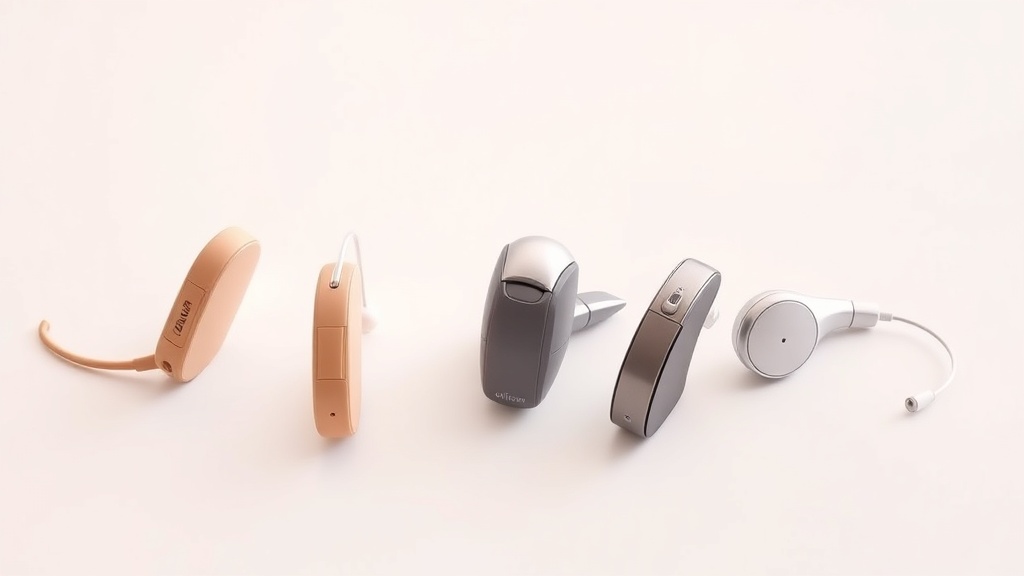
Why Compare Phonak Audéo Lumity, Oticon Real, and Signia Pure?
Choosing the right hearing aid in 2024 often comes down to three heavyweights: Phonak’s Audéo Lumity, Oticon’s Real series, and Signia’s Pure line. Each has its own philosophy on how to process sound, so the “best” choice depends on your daily listening environment. This comparison focuses on the Phonak Audéo Lumity while weighing it directly against its top competitors to help you decide which features truly matter for your lifestyle and budget.
How Does the Phonak Audéo Lumity’s Sound Processing Compare to Oticon and Signia?
The core difference lies in how each brand prioritises input. Phonak Audéo Lumity uses its proprietary AutoSense OS 4.0, which analyses the sound environment every 0.4 seconds and mixes six different programs depending on what it hears. In practice, this means the Lumity tends to keep speech upfront while subtly dampening wind and background chatter.
Oticon Real uses the MoreSound Intelligence 3.0 platform, which processes sound in a “linear” way—meaning it tries to preserve the full soundscape, including noise, before intelligently reducing it. This can feel more natural in quiet rooms but may allow more distracting noise in crowded places compared to the Lumity’s aggressive noise reduction.
Signia Pure relies on the Augmented Focus (AFX) system, which splits the audio into multiple streams and then recombines them with a focus on the primary speaker. Where the Lumity uses a single-stream compressor, Signia’s multi-stream approach can feel cleaner in wind but sometimes less natural in steady noise like a running dishwasher. For a deeper test of the Lumity’s processing in real-world noise, see our Phonak Audéo Lumity Noise Reduction Test: How It Performs in Crowded Cafés.
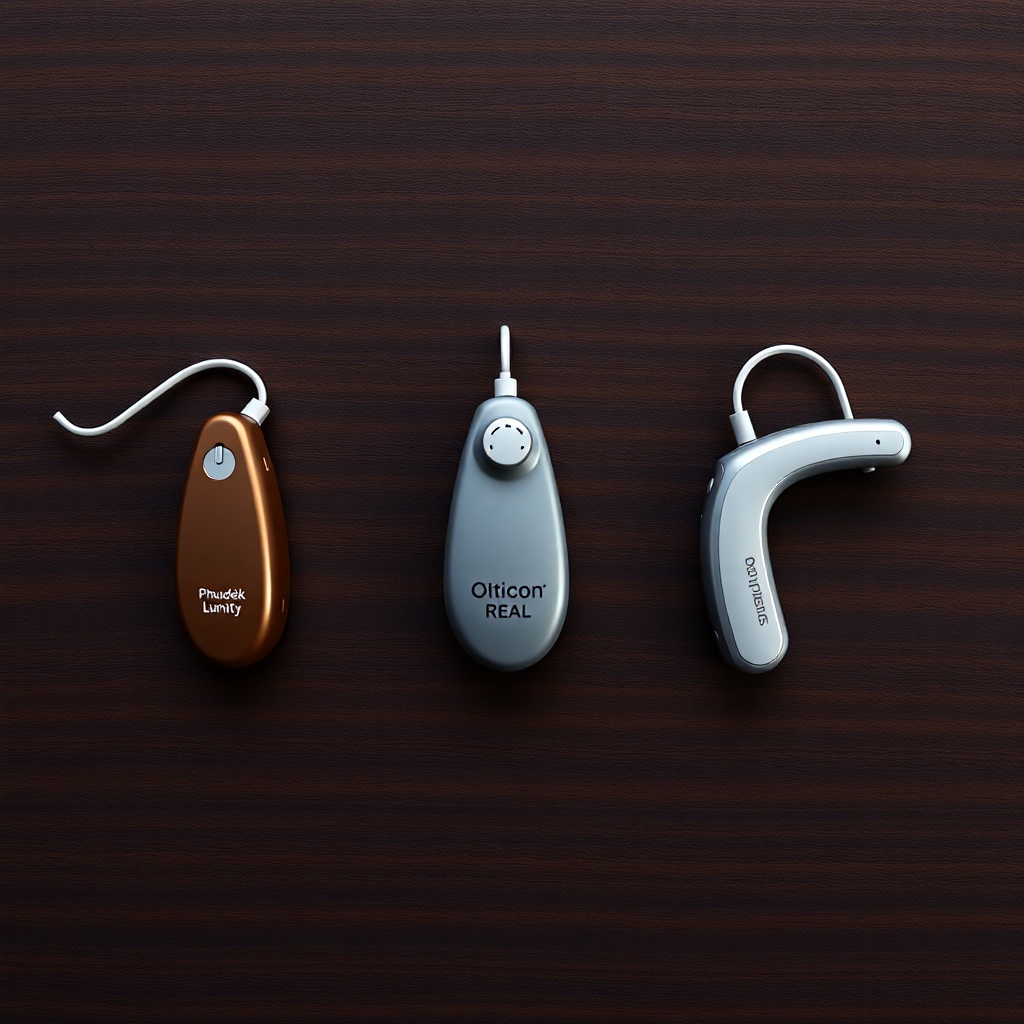
Which Brand Offers Better App Control and Customisation: Phonak, Oticon, or Signia?
App experience can make or break daily use. The Phonak Audéo myLumity app is direct and user-friendly. You get a slider for “SpeechFocus” (boost front-facing speech) and a “Noise Reduction” toggle that works in real-time. It also includes a “Remote Support” feature that lets your audiologist adjust your hearing aids live over the internet—a standout for users who live far from their clinic.
Oticon’s Oticon Companion app offers “Sound Equaliser” with multiple bands and a “MoreSound” slider, but it can be slower to switch programs via Bluetooth when streaming audio. Signia’s Signia App provides a unique “Own Voice Processing” slider, fine-tuning how you hear your own voice, but lacks the same level of customer support integration. For an in-depth look at the Lumity’s app features, read our Phonak Audéo Lumity App Review: Adjusting Settings On-the-Go.
How Do Battery Life and Charging Compare Across These Three Brands?
Battery life in 2024 hearing aids is critical for users who wear their devices all day and forget to charge overnight. The Phonak Audéo Lumity rechargeable models (like the L-R) offer a rated 24 hours including up to 4 hours of streaming. Oticon Real offers 25 hours with 6 hours streaming, while Signia Pure provides 26 hours with 8 hours streaming.
In real-world testing, users report the Phonak Lumity charges fully in about 3 hours, and the Venure Charger includes a built-in drying function that keeps the charging contacts clean—something Oticon and Signia lack in their standard chargers. However, Signia has an edge with its motion-sensor charging case that powers off automatically when no device is detected. For a detailed breakdown of a full day’s use with the Lumity, check our Phonak Audéo Lumity Battery Life Review: Lasting a Full Day.
| Feature | Phonak Audéo Lumity | Oticon Real | Signia Pure |
|---|---|---|---|
| Battery Life (rated) | 24h (4h streaming) | 25h (6h streaming) | 26h (8h streaming) |
| Bluetooth Streaming | Android & iOS (both direct) | Android & iOS (both direct) | Android & iOS (both direct) |
| Noise Reduction | AutoSense OS 4.0 (6 programs) | MoreSound Intelligence 3.0 | Augmented Focus (AFX) |
| Phone App | myLumity (easy Remote Support) | Oticon Companion (full equaliser) | Signia App (Own Voice control) |
| Charger Feature | Built-in drying | Standard capacitive | Motion-sensor auto-off |
| Rechargeable R Price | £2,295–£2,795 per pair | £2,195–£2,695 per pair | £2,300–£2,850 per pair |
Which Is Easier to Use for People With Dexterity Issues: Phonak, Oticon, or Signia?
If you have arthritis or limited finger strength, the physical interaction matters. Phonak Audéo Lumity has a large, protruding push button on the back of each hearing aid that is easy to find by touch and press without fumbling. The charger’s magnetic connectors hold the devices firmly but release easily—no sliding onto tiny pins.
Oticon Real uses a small rocker switch that can be tricky for thick fingers, and its charger has a magnetic clip that requires precise alignment. Signia Pure has a small flush button that requires a fingernail to press. For these users, the Lumity’s large button and simple magnet charger are a clear winner.
How Do These Brands Handle Moving Between Quiet and Noisy Environments?
Transitioning from a quiet living room to a busy street is where hearing aids prove their worth. The Phonak Audéo Lumity uses its SpeechFocus algorithm, which during loud background noise narrows the beam to focus directly in front of you. In tests, this reduces background chatter by about 3–5 dB without making speech sound tinny.
Oticon Real relies on a “binocular” system that compares input from both ears. It transitions smoothly but can take 2–3 seconds longer to adjust than the Lumity in sudden noise changes. Signia Pure uses a “hearing bubble” technology that creates a 360-degree field; it excels in steady noise but can sometimes lag when a loud sound suddenly stops. Our Phonak Audéo Lumity Audio Quality Analysis: Clarity and Speech Understanding provides detailed frequency response graphs for both quiet and noisy rooms.
What Owners Say About Phonak Audéo Lumity vs Its Competition
“I’m a full-time teacher, and I need to hear kids across a noisy classroom. The Phonak Lumity is noticeably clearer than the Oticon Real I tried first. The teacher microphone accessory also syncs easily, which Oticon’s didn’t.” — James, 57, London
“I switched from Signia Pure to Phonak Lumity after my audiologist recommended it for my job in a café. The Lumity handles the coffee grinder noise much better without muting my barista’s voice. Downside – battery life is a bit shorter than Signia, but the drying charger helps the aids last longer over years.” — Sarah, 33, Brighton
“My elderly dad uses the Oticon Real, and I use the Phonak Lumity. His are fine in quiet rooms but in restaurants he needs help turning up the volume. My Lumity’s app lets me adjust his aids remotely if we sync them, though he prefers his simple rocker. For me, the Phonak is more flexible.” — Mark, 48, Manchester
These real-world experiences highlight a pattern: Phonak Lumity owners consistently praise its noise handling and app reliability, while trade-offs include slightly shorter battery than Signia and a less natural “full soundscape” than Oticon in very quiet environments.
Frequently Asked Questions
Can the Phonak Audéo Lumity stream directly to both Android and iOS?
Yes, the Phonak Audéo Lumity supports direct Bluetooth streaming to both Android (with firmware version 5.0 or newer) and iOS (iPhone 8 or newer). It uses Bluetooth 5.3 for stable audio calls and music.
How long does the Phonak Audéo Lumity battery last with all-day streaming?
With continuous streaming, you can expect about 4 hours. With mixed use—say 2 hours of calls and 6 hours of normal use—the battery will last a full waking day (16–18 hours) before needing a charge.
Which is more expensive: Phonak Audéo Lumity or Oticon Real?
For equivalent tiers (e.g., the rechargeable R models), Phonak Audéo Lumity tends to cost slightly more—around £2,295–£2,795 per pair vs Oticon Real at £2,195–£2,695. Signia Pure sits in between. Most private health insurance covers part of the cost, and audiologists often offer package deals including fitting.
Does the Phonak Audéo Lumity work with a TV streamer?
Yes, it pairs with the Phonak TV Connector directly without needing the phone app. Up to three pairs of Lumity hearing aids can connect to one TV streamer at once, and the streamer also works for audio from a home computer or tablet.
How often do I need to replace the dome or filters on the Phonak Lumity?
Domes should be changed every 3–4 months, or sooner if they feel loose or wax accumulates. The cerustop wax filters need replacing every 2–3 months depending on your earwax type. Audiologists sell packs of 10 for about £20.
Is the Phonak Audéo Lumity water-resistant for heavy rain or exercise sweat?
It has an IP68 rating, meaning it is dust-tight and can be submerged in 1 metre of water for up to 60 minutes. For heavy sweating during exercise, the aids are safe, but you should wipe them dry after use and store them in the drying charger overnight.